
Bad Widow
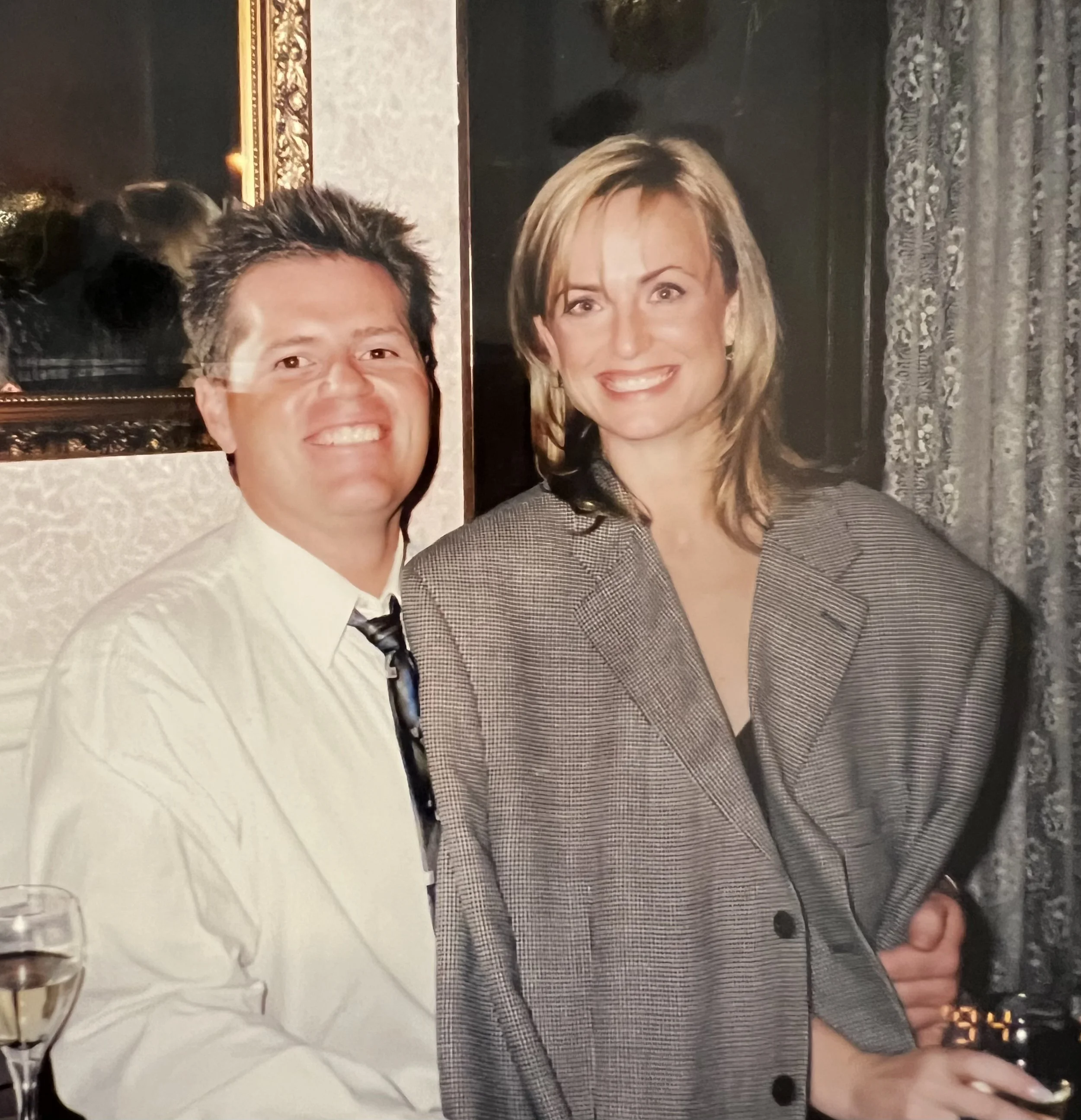
My husband died. For a long time, that’s how I started most conversations. Even those casual conversations with the grocery clerk or barista. Despite the passing of time and the healing of my boundaries, I still have to coach myself to not lead with the news when I meet new people. My girls have helped. Mom, stop telling strangers about Dad. For reasons I can’t explain or comprehend, it seems more than a little wrong to not mention it, mention him.
I get that it’s bonkers to tell strangers about my dead husband. It’s obvious that it makes people wildly uncomfortable. No duh. In the early days, I think it was part of the process of my shocked mind, body, and spirit trying to make sense of it. To move out of those crazy days during which I would imagine that there were some perfect series of actions or events that would bring him back. Denial. Before losing Dave, I wondered how on earth people could possibly be in denial about death. Seemed like the last thing one could think or feel about death. But I found it was the first thing that I thought and felt about death. Shock and denial.
Dave dropped dead from a heart attack out of the blue one Tuesday afternoon. He was 58. He had just put his shoes on to come and pick me and our oldest daughter, Jessica, up from the auto repair shop. The doctors say it was immediate. No suffering. I hope that’s true. Our youngest daughter found him. Sydney. She was 14. I was her first call and I didn’t pick up. I was handing the car keys to the mechanic. I let the call go to voicemail. Called her a minute later. No answer. My baby girl was busy calling 911 and following their instructions in an attempt to revive her dead dad. I was laughing and chatting with Jess while we waited for him to pick us up. We were happy after wrapping up a day of errands in preparation for her first year at McGill University. We were flying to Montreal the next day. I was beginning to wonder about Dave because he was a few minutes late and he was almost always early, almost never late. I was beginning to wonder why Syd wasn’t responding to my calls and texts. Fifteen minutes passed from that missed call. Fifteen minutes of my life that would have been completely and quickly forgotten. I finally reached Sydney and life as I knew it ended. Dad is on the floor non-responsive. On our drive home from the repair shop, hope and denial kept the car between the lines.
My house was a crime scene. Literally. That’s what the police said. Standard procedure when an apparently healthy person drops dead. There are systems. Over time, I have pieced together the events of that afternoon, that hour. Certain aspects of it standing out as though they were yesterday. A police officer telling Sydney her dad was dead before I arrived. Running into the house and straight to my girl to hold her in an attempt to protect her. The well-meaning victim support worker explaining the business of death to me in front of my kids. The coroner taking my husband away in a plastic bag. The emergency responders leaving behind a house that no longer felt like our home.
Other aspects of those first few days are hazy. I know that I called people with the news. I know, after spending the night in the basement, I walked back onto our main floor for the first time, back into our bedroom for the first time. I know I talked to the coroner’s office. I know I got the first of many meals delivered by someone who loved me. But I can’t really remember those things. They are lost in the haze of shock.
Losing Dave was like a bomb blast in my life, in my body, mind, and soul. Like all crises, there is no luxury of healing before the work of disaster recovery begins. Thank God for shock and denial. Thank God for all the dysfunctional coping mechanisms that we go through years of therapy to dismantle but that save our asses in a crisis. Disassociation. Control. Distraction. I split in two during those early days. One part destroyed by grief. One part pragmatically managing the disaster recovery effort. It would take months, if not years, for me to weave the parts of myself back together. And even healed, I would be forever altered. Not better or worse, but altered.
When he died, my immediate thought, although probably subconscious, was that every aspect of my life would never, could never, should never be the same. That returning to any type of sameness would somehow feel like giving my consent to his death. In the hours after his death, my girls and I planned to go to a hotel. We couldn’t imagine sleeping in our house. A friend took our dog. We packed a few things. At least, I assume that we packed a few things but I have no memory of that. Maybe we didn’t pack anything. We were halfway to the hotel when we changed our minds. We would sleep on the couch in our basement. The friend brought our dog back. The next night, we slept in our beds. Although in those early days, I couldn’t sleep much. Returning to our own beds. The first way that life returned to sameness. The sameness magnified my loss. On the same side of the same bed lying next to emptiness instead of lying next to Dave. Perhaps my first step toward acceptance.
Each time my life returned to “normal”, I struggled with the pain and guilt of the strange limiting belief that I was somehow condoning his death. Bonkers, I know. But death is bonkers. A few weeks after he died, I slept through the night. A month after he died, I regained my appetite. With each of these steps toward normalcy, I judged myself – Bad Widow.